
This post has been a year in the making. I’ve wanted to share what our experience has been like but I wanted to be sure I waited long enough to give a comprehensive account of what this has been like for us. As women we complain quite a bit about how little attention is given to menopause but frankly there is even less attention given to prostate cancer recovery. I mean, sure, you can find statistics about life expectancy and chances for cure but no one really talks about how your life changes. Even less attention is given to what it’s like for the spouse of someone with prostate cancer. Hopefully my experience will be helpful to someone else.
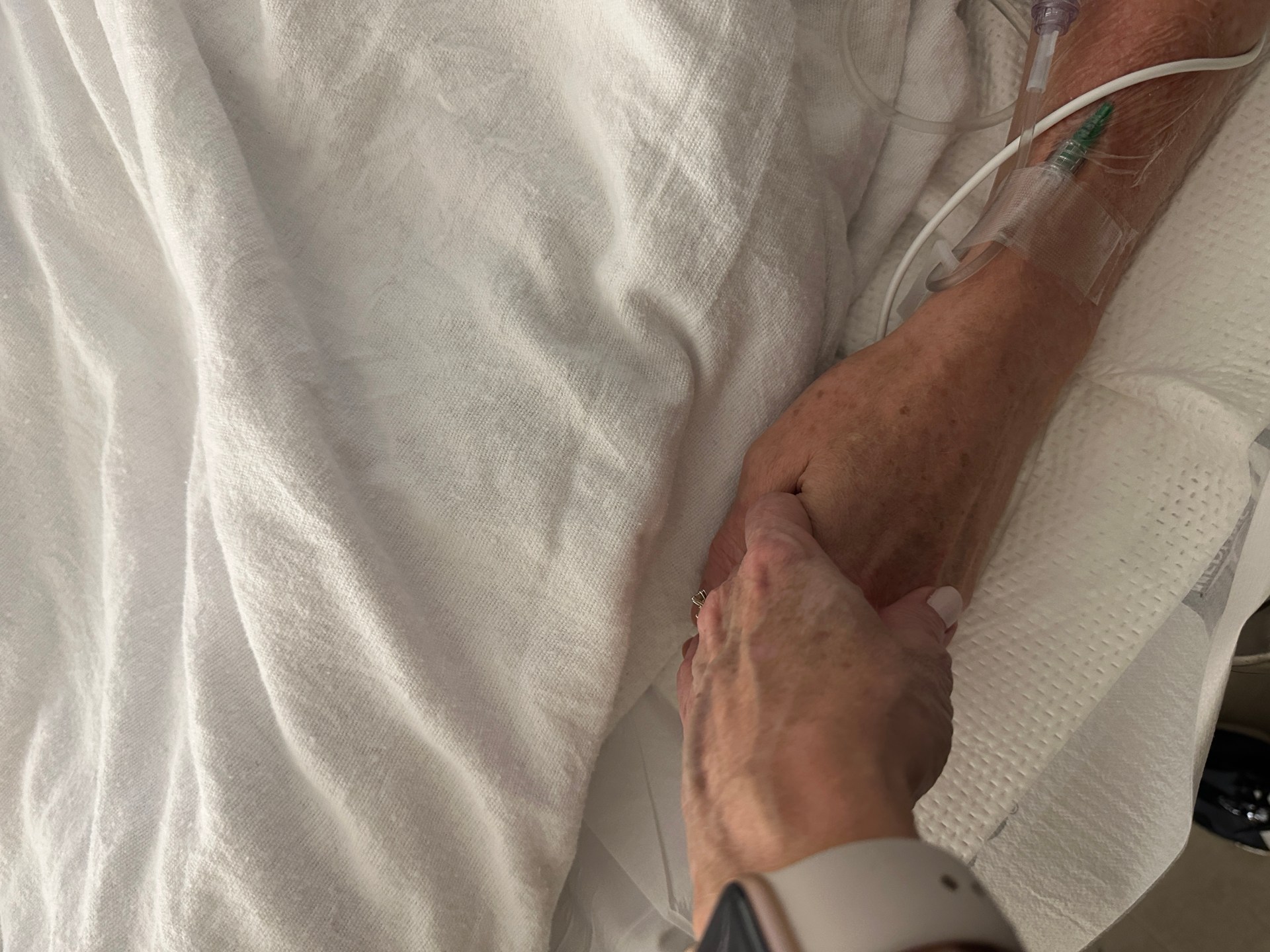
Prostate Cancer: A Wife’s Perspective
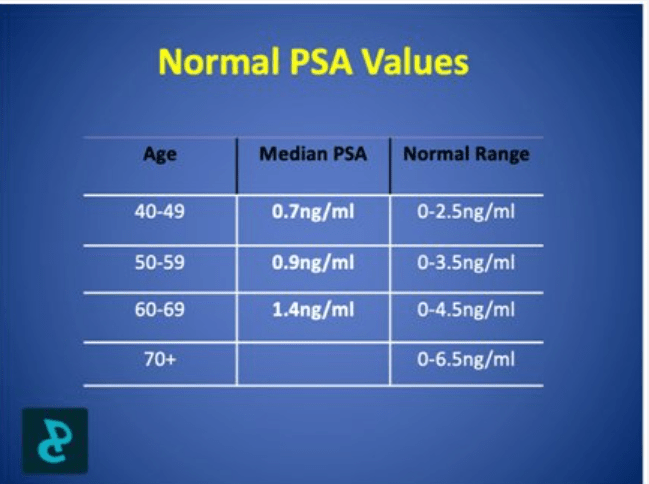
Our journey started several years ago when during his yearly physicals and blood work my husband’s PSA levels were rising. The doctor kept ‘watching’ the levels and ordering blood tests every few months. Sometime in 2023 we recall the numbers were 4 or 5, take a look at the chart below for normal PSA levels.
In November 2023 my husband has his first biopsy. This was performed by a urologist in an outpatient surgical clinic. The doctor did offer to perform this procedure in the office but my husband asked for a general anesthetic. I cannot even imagine how painful it would have been had he not. Anyway, the biopsy came back showing no evidence of cancer so we went back to the waiting game.
In 2024 his PSA continued to rise and with it my aggravation. Why were we watching this number rise and not doing something? I could not understand how any of this worked but something did not seem right to me. At our urging the urologist scheduled a different type of biopsy. This one was more invasive and sampled more tissue. The results showed cancer in 7 of the 8 samples taken.
The samples are given a Gleason score and it determines the need for intervention. Of the 7 samples that tested positive, 6 showed a Gleason score of 6 but one showed a Gleason score of 7. A Gleason score of 6 requires monitoring while 7 -10 requires treatment. We felt blessed to have one that was a 7 because it meant we could finally have this resolved. If all the samples had been a Gleason score of 6 they would have continued to monitor.
You Have a Diagnosis, Now What?
Unfortunately my husband’s results were in his patient portal and that is how we found out he had prostate cancer. While we figured as much, it still feels like a punch to the gut. Cancer is never a word you want to hear. It doesn’t matter how common prostate cancer is or how many men are diagnosed and doing just fine, when you hear that your husband has prostate cancer it’s scary.
The next weeks were a blur. We were planning our trip to Italy at the same time we were trying to get appointments to find out about treatment options. My husband wanted one thing: surgery. He wanted the cancer removed from his body. I don’t blame him, but as his wife I couldn’t help but wonder what that would mean.
Treatment Options
When we met with the urologist he told us our options were surgery or radiation. He explained that radiation would damage healthy cells and obviously have some side effects. I knew enough about radiation to know the worst part was having to go 5 days a week for treatment for approximately 6 weeks. It didn’t matter to my husband because he was only interested in surgery. So, we made an appointment with someone who specializes in robotic prostate cancer surgery, also known as Robotic-Assisted Prostatectomy.
Some of the side effects of having your prostate removed include incontinence, erectile dysfunction (ED), infection, infertility, and damage to nearby organs. So, to put it bluntly, you don’t lose an organ and life goes on as if nothing happens (well maybe if you lose your spleen?).
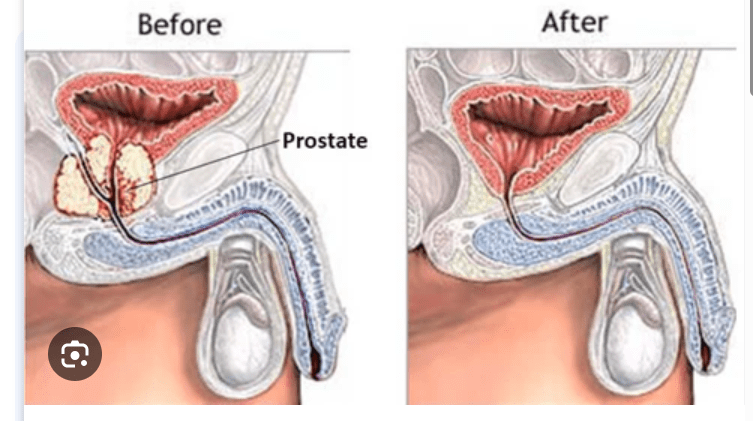
We talked about the risks and side effects with the urologist. He assured us that even though my husband has high blood pressure, he would still be given medication for ED and that this is started immediately after surgery because they need to be sure the blood flow is not interrupted.
Meeting with the Surgeon
So, off we went to meet with the surgeon. This took several weeks and I don’t know about you, but when you or someone you know has cancer you kind of want it to be treated immediately. Patience is certainly a virtue though and we learned to remain calm and trust God with the process.
Our meeting with the surgeon was brief and upbeat. He told us how easy the surgery was, how long recovery would last, and again down played any discussion of ED. Let me be very clear here, THIS is a big deal to a wife whether anyone cares to admit it or not. I love my husband and most certainly care that he is alive more than anything else BUT ED is a real concern. We’re too young to ignore this part of our lives. If were well into our 80s maybe it wouldn’t be a big deal but we’re in our 50’s. From this wife’s perspective it’s a big deal.
Everyone was happy to move along and schedule the surgery – June 4th – the day after my birthday. Ugh. As the date got closer and closer I felt incredibly uneasy. There’s a whole prep you have to go through the day before surgery and none of it is pleasant. My birthday was an awful day for us both and we were so glad when it was over.
Surgery
The day of surgery we arrived at the hospital and got my husband set up. Thank goodness my best friend came and sat with me all day. Surgery took a very long time. I was so happy when it was over and we were called back to see him.
Unfortunately my husband had a very bad reaction to the anesthesia. He became violently ill once we got him settled in his room. This lasted for several hours and it was miserable. I felt so badly for him and there seemed to be nothing anyone could do – which really made me wonder. The pain and stress put on his abdominal area was awful.
We had been told he’d be in the hospital one night and then go home with a catheter for the next 10 days. He ended up being in the hospital for 2 nights. I was very proud of him because he did get up and walk the halls with me – which I think was good for us both. I’d say he wasn’t in too much pain but he wasn’t exactly comfortable either. And a catheter is no fun.
Recovery
I’ll fast forward through the recovery. I encouraged him to walk outside with me a little bit everyday. We had to carry the bag attached to the catheter but we put it in one of the reusable grocery bags and that worked just fine. It came with several attachments that had to be cleaned and sterilized; luckily my husband handled all of that – he is very thorough and the last thing he needed was an infection.
We also had to administer shots each day for 30 days to prevent blood clots. I gave him the shot each day in the back of his arm. Some days it hurt worse than others but we managed. Honestly we were both so happy when that was done!
The catheter was removed at his post op appointment. That was extremely painful for him and I felt so helpless. However, once it was gone my husband felt so free!
There were many post op appointments to make sure he was healing properly and luckily no problems. He really did not suffer with any incontinence but they did suggest he wear a leak guard once the catheter was removed. He wore one for probably close to a month. Since then he has had no issues.
The ED is quite another story. You see, the urologist and surgeon both said he’d be starting on medication to increase blood flow to the pelvic region right away. But the PA – who we saw for all the follow up appointments – explained that this is not the case. It was several month until medication was prescribed.
Treating ED
It’s funny how we hear all about the ‘little blue pill’ and think it’s magic. Well, it’s not once you’ve had your prostate removed. There are a series of exercises and therapies the patient has to practice. My husband was referred to a physical therapist for awhile. He was also given a pump to use. It was explained to us that this was necessary not just for sexual health but also to make sure that the blood flow and nerves were healing.
Without being too graphic, I’ll say this: if your husband has prostate cancer and has surgery be prepared for things to change. As much as I thought I knew, I really didn’t know because no one I knew could really tell me. So I am. I’ll also say that where there’s a will there’s a way. The PA told us that the majority of men who had no ED issues prior to surgery will have an easier recovery so keep that in mind. There are many options to treat ED too – different medications, as well as other devices to ‘assist’ – not just the pump apparently. So if you find yourselves in a situation where ED is a problem TALK ABOUT IT. Speak up and don’t just settle. I think too many men (and women) are uncomfortable talking about things like sex and that needs to change. The quality of your life depends on it. Find your voice.
Follow up blood tests to check the PSA are routinely ordered every few months. This helps determine if any follow up treatment is required. Luckily, my husband’s numbers have all been normal so we feel confident that there are no hidden cells that escaped and are growing anywhere else.
Wife to Wife
So what I would tell you, wife to wife: make sure your husband has his PSA checked each year. Stay on top of those numbers, ask questions and GO WITH HIM to his appointments. None of it is pleasant. It’s hard when your body betrays you and I support my husband in the decisions he made. Of course they affect me too but we’re partners and I love him. One of the hardest parts of this journey for me was when we were referred to the surgeon. His office is the MD Anderson Cancer Center here in Orlando. My husband was on the cancer floor at the hospital where there were reminders everywhere that he had cancer. I hate that word. I hate what it means. All along, I had compartmentalized the ‘prostate cancer’ thing as not really being cancer – which sounds crazy I know. But that’s hard to do when all of your appointments are at the cancer center and you are surrounded by lots of other patients. I wanted to scream, “This isn’t who we are, we’re healthy! We aren’t like all of these other people. They are sick, we are not.” Denial friends, denial.
It’s not the end of the world when your husband has prostate cancer. I’m grateful we are on the other side of this journey. I’ve learned a lot. It’s funny that I worked at MD Anderson Cancer Center in the 90’s (running breast cancer support groups and providing individual and couples therapy) and then returned there 30 years later on the other side of things. I appreciate the perspective this gave me and I hope I can help someone else. That said, please feel free to email me any questions you have. This can be a very sensitive topic and I understand that not everyone is comfortable sharing in a public forum.
Like I said earlier: FIND YOUR VOICE. Talk openly and honestly to your husband, advocate for him and yourself. The quality of your life does, in fact, depend on it.
Thanks so much for stopping by today, I appreciate you being here. Please consider signing up to receive my posts by email and following me on Instagram and Pinterest.

- Prostate Cancer: A Wife’s Perspective
- Friday Favorites – Birthday Edition
- Four New Summer Dresses from the Charlie B Collection
- You Are Worth Celebrating
- Best of May Friday Favorites


